
Pop Up Digital Marketing Social Media Beginner's Guide

Beginner's Guide to Social Media

Step by step guide on how to choose the right platforms for your business and build a strong Social Media strategy.

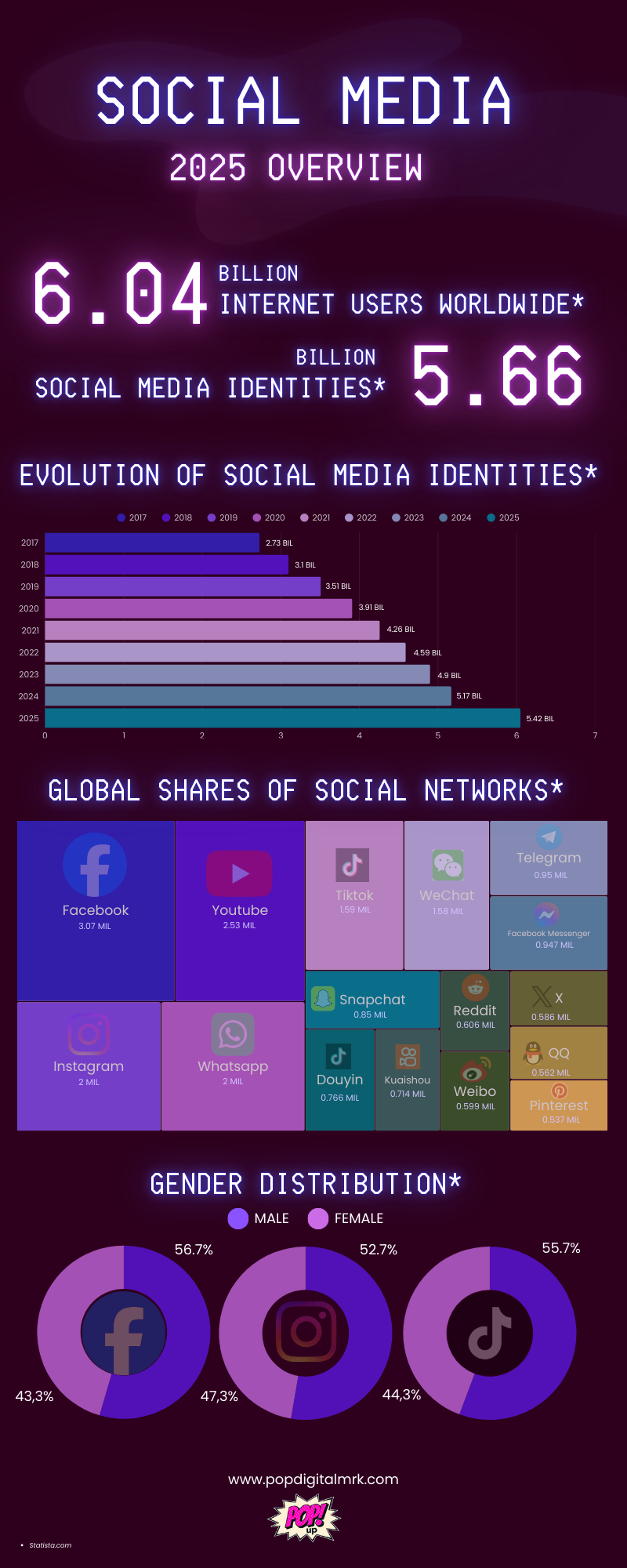
pop up digital marketing 64% social media users identities vs population worldwide

Social Media is not dead!

2025 was an iconic year for digital marketing, not just from an AI development perspective, but also from the Social Media landscape point of view. Consumers and brands are more connected than ever through good quality engagement and multidirectional communication. Those businesses that learn how to master the power of social media will win in 2026. 

There are 64% social media users identities vs population worldwide (statista.com). Like it or not, you can’t deny the impact social media can have on your business.

The real question is: how can I better leverage Social Media for my business?

Before answering this question, let’s have a deep dive into Social Media and how it works. Are you ready?

pop up digital marketing how social media started

The Big Social Media Bang - how it all started

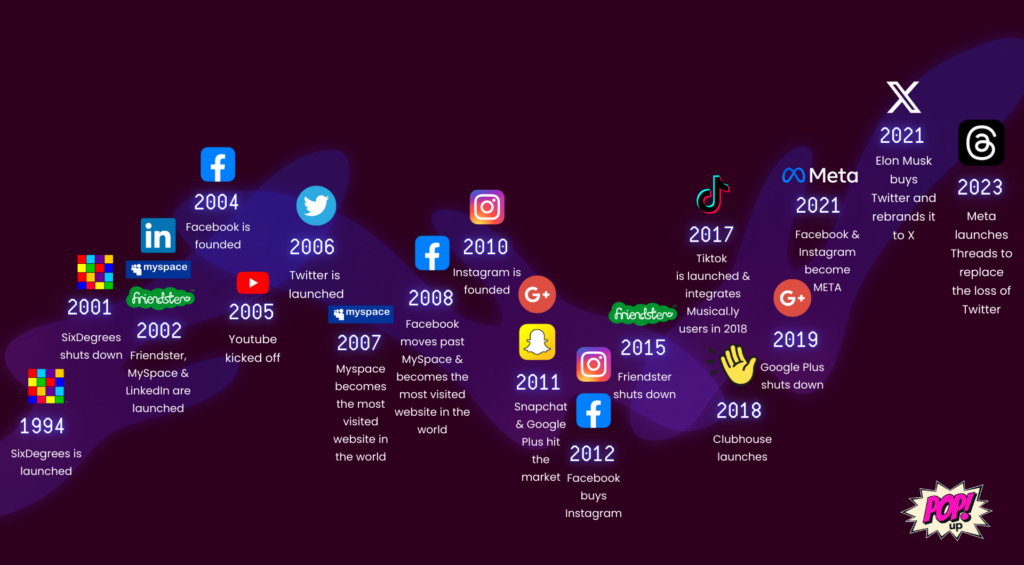
At the very beginning of Social Media, it all started with a social networking platform launched in 1997, called SixDegrees. It was groundbreaking because it was the first service to combine key features such as User Profiles, Friends Connections, Network Exploration & Communication to enable its users to explore a connection chain where everyone on the planet could interact and socialize with each other, through a chain of no more than five intermediaries.

SixDegrees was groundbreaking because it set up the tone for the iconic social media platforms that followed, such as Friendster, MySpace, LinkedIn, and Facebook.

Facebook - one social media platform to rule them all​

The most popular Social Media platform of them all started in a Harvard dorm room, back in 2004. Back then it was called “TheFacebook”. In 2006, after it expanded outside college territory, anyone with a valid e-mail address could access the platform. Fast forward to today, it’s become the big META empire we know today, Instagram joining in on the go in 2012. 


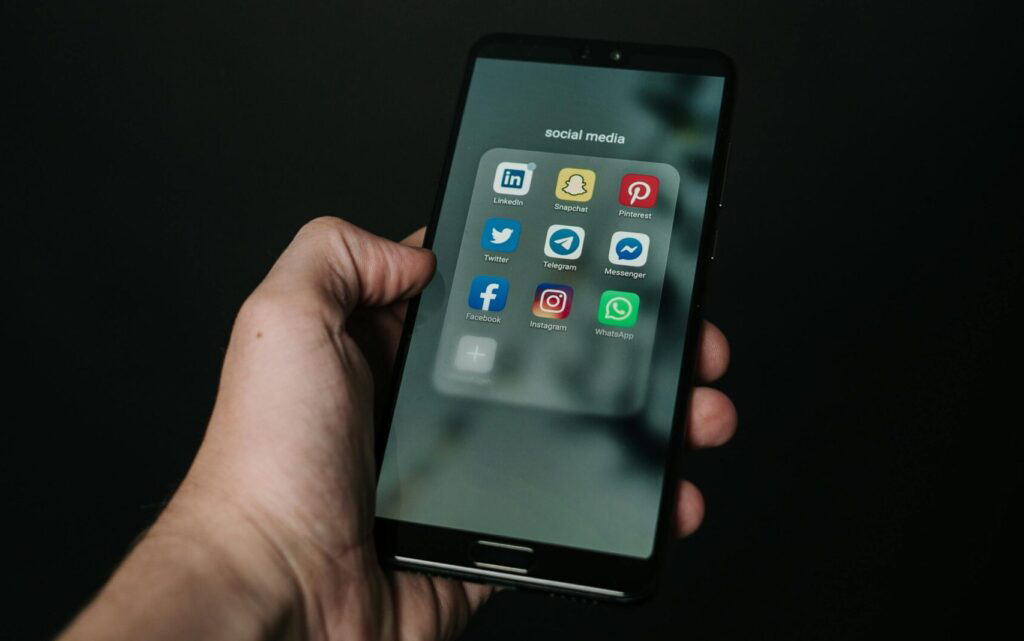
In the meantime, there are plenty of other Social Media platforms that have been a great success, some honorable mentions being Youtube, Tiktok, Snapchat, Pinterest, Quora, Reddit aso. 


The very first brands to advertise on Social Media were school clubs or local businesses that wanted to advertise events or services to the target audience that was formed of college students at the time. They used to advertise through “Flyers”, which later on evolved to CPM (cost per mile / thousand impressions) in the form of “Sponsored Groups”. The first brands to test this kind of advertising were Apple & Victoria’s Secret at a flat rate fee along with a monthly payment. CPM & CPC still had a long way to go.

A brief history of Social Media Platforms​

pop up digital marketing Social Media History timeline

Although the Social Media road was rocky, there are only a few strong platforms that have been able to survive the changes and Facebook is definitely the strongest of them all. 

pop up digital marketing beginner's guide to social media 2025 infographic

Okay, nice history lesson, but how does Social Media work?

Every Social Media channel is different and works based on a certain algorithm that looks at the signals the platform consumers give to your brand’s content. The purpose of a platform is to recruit as many users as possible and to make them stay online and spend time there as much as possible.


That’s also one of your brand’s purposes, because the more time they spend there, the more interaction opportunities between your brand and your consumer you get.

And, how do I do that?

You do that by being RELEVANT, by bringing ADDED VALUE through your content and by showing the SOCIAL SIDE OF YOUR BRAND.

I feel like nowadays there are a lot of brand that confuse Social Media with billboards and create unidirectional communication strategies, focused on product, promotions and salesy content. There’s nothing wrong with adding that to the mix, but Social Media platforms are mostly for socializing, multidirectional communication, conversations, real-time actions, random acts of kindness aso. 

Imagine that people are consuming the content during their breaks, in their free time. They need to relax and be entertained. Nobody cares that you have a 3rd promotion this week for your teeth whitening range (no offence).

How does the algorithm work?

Most algorithms work on Social engagement signals, but what matters might differ from one platform to another.


For example, on Facebook you might have classical signals such as Likes, Comments, Shares, while on Instagram, you also have Saves & Shares to private chats. On platforms like Tiktok & Youtube you have Views, Video Completion Rate & Average Watch Time. It all depends on how the user consumes the content on that platform and this is how you should also tailor your content. 


When it comes to having your content pushed on Social Media platforms, relevance is key, but also keep in mind that organic doesn’t work the way it used to, so a mix of paid & organic is a must.


Around 90% of consumers reportedly buy from brands they follow on social media, according to MarketingDive

How do I build a strong Social Media Strategy?​

When deciding to expose your business on Social Media, it’s really important to have a strategy to follow. Being flexible and freestyle is a plus when it comes to real-time-marketing, but even this needs to be integrated in a strategy. Otherwise, opportunities might be missed out.


When it comes to building a strategy, there are lots of things to consider, such as: 

  1. Defining your business objectives and translate them to Social Media objectives;
  2. Identifying your target audience (demographic, psychographic & lifestyle);
  3. Deciding the most relevant Social Media mix for your business;
  4. Creating a Social Media guidebook to follow: how often do you post, how fast do you reply to your community, how should your profile grid look like;
  5. Generating best practices – what works and what doesn’t work for your brand (updated constantly based on key learnings);
  6. Building a Content strategy after identifying the most relevant content sources you have available;
  7. Creating a reporting template defining the main digital KPIs that are relevant for your brand & your overall business objectives.
pop up digital marketing how to choose the right Social Media platforms

How do I choose the right Social Media platforms for my business?

First of all, you start with defining your business objectives and target audience: demographic & psychographic. Then you correlate it with the data you have on the existing Social Media platforms relevant for the market you’re activating in. 

For example, if your business objective is to grow a tribe around your brand and you have a mature target audience, you will go for social platforms that have the biggest target audience that fits your age range, such as Facebook  or Youtube. On the other hand, if your business is targeting a younger audience, you could go with Tiktok. 

What’s also important is the resources you have in order to sustain a relevant presence on the Social Media platforms of your choice. While on Facebook and Instagram posting daily is not mandatory, platforms such as Tiktok are more demanding in terms of content frequency, some brands going for posts several times a day, every day.

How do I create a strong Content Strategy for my Social Media presence?​

Whenever it comes to a good Social Media presence, it’s all about what you say, how you say it and what you do. Let me be more specific.

Pop Up Digital Marketing Email Marketing eCRM

What you say

You need to define key messages that are relevant for your brand to communicate. It can be about your product benefits, your offers and your consumer activations, but it also has to be about your audience, their needs, their struggles and their problems. Also, do not forget about the brand values. These are also important to communicate from time to time to remind your consumer why you are so relatable.

pop up digital marketing social media tone of voice

How you say it

When it comes to Social Media communication, it’s important to define a strong & characteristic tone of voice for your brand. You can even define a specific vocabulary, or specific phrases to use in order to contour your brand voice better.

Pop Up Digital Marketing Communication Strategy

What you do

In every Social Media strategy it’s important to define a set of actions that will also define the characteristics of your brand. For example, if your audience uses your brand or products for User Generated Content, you can decide to use this behavior as a consumer engagement opportunity, or perhaps you can even integrate it into your feed content.


Next step - Defining your Social Media content sources​

Besides all of the above, you need to properly identify your content sources, to know what’s the content creation power you have.


For example, if you’ve integrated influencer marketing to your digital communication strategy, you can decide to use that content as a mix. Maybe you have an internal graphic designer that can help you create your content from scratch, where you can even integrate stock assets. Or maybe you’re doing your content on your own, with your phone, a ring light and Canva as your best friend.


No matter what your sources are, it’s important to be realistic about how much content you can produce. This will help you decide if it’s feasible to expand your platform mix or if it’s enough to stick to the basics.

pop up digital marketing how to structure social media content

Content mix - how to structure your content

Don’t forget that your audience is formed out of humans and humans are creatures of habit. In a world where we have tons of choices, everything is over complicated and there’s a lot of noise, it’s important to bring a simplified & straight forward communication to your audience. Keep it simple. Don’t overthink it and don’t over edit it. It doesn’t have to be perfect, it has to be good enough. 


I see a lot of brands focusing on their products, or what are the seasonal offers. There’s nothing wrong with that, but this content is sales, cold and it beats the purpose of being on Social Media. Let’s not forget that the purpose is in the title: to socialize.

When it comes to structuring your content, you’re not just doing it for the sake of OCD, but with the sole purpose of giving your audience a structure to follow and a habit to integrate in their lives. Let’s say that every Monday you’re offering them tips and tricks on how to better integrate your product into their lives. After a couple of Mondays they would actually be expecting it and looking forward to it if it brings added value to their lives. 


What should a content structure look like? You can split your week into 7 slots, one for each day, and based on the posting frequency, you can decide to go for 40% communication on the product/service, 20% UGC, 30% addressing the audience’s problems/insights & 10% lifestyle or inspirational. Depending on your business specifics, the mix can look different. In case your posting frequency is lower due to lack of content resources or business specifics, you can opt to split your calendar into 4 slots, one for each week. The most important thing is to be authentic. 

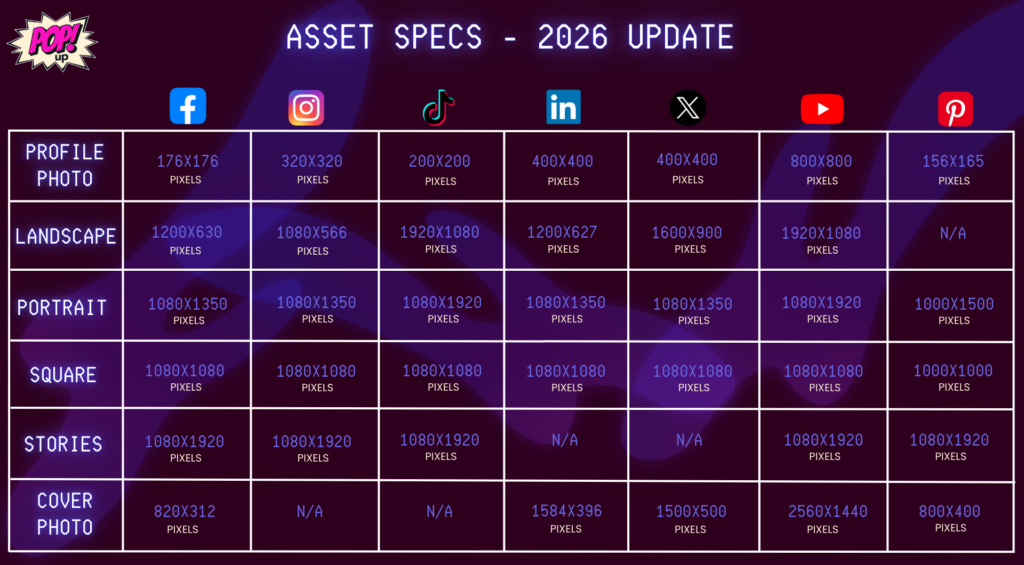
Social Media Content Specs

What’s next? How do I implement it?

After deciding which platforms are relevant for your business, define the objectives, the KPIs and the content strategy, it’s time for the next step: building the editorial calendar

Building an Editorial Calendar

The Editorial Calendar is a resource that helps you better organize your social media activity, plan it ahead and measure the performance. Usually it’s planned monthly, but if you have a very intense Social Media activity, you can plan a weekly calendar.


What does an Editorial Calendar contain and how do I do it?

You can personalize it to your business’ needs, but a basic one should contain the following: 

  • A grid overview of the posts (it helps envision the aesthetics of the profile);
  • The visual assets of the posts (photo/video); 
  • The copy that will accompany the post; 
  • The date & time of the post;
  • The objective of the post (traffic, engagement, awareness);
  • The boost budget (in case you decide on this approach in your strategy);
  • The platforms where the post will be shared.

Here's an Editorial Calendar template to guide you through building a successful Social Media presence for your business.

pop up digital marketing Social Media Specs 2026 infographic
pop up digital marketing social media community building

Social Media Community Building

Besides building a strong Editorial calendar, you should also focus on building a community around your brand.


Building a community is not just about a high number of followers, but also about the quality of those followers. I’m not only talking here about real users, but about people who are truly and genuinely interested in your brand.


That’s why your strategy should focus on building the right community instead of building a big community. 

What are the perks of building a community?

  1. You have a pool of people that are engaging with your brand and content, that are open to your messages and are loyal to your products/services. 
  2. You can always target them in your paid media campaigns with special offers and retarget them whenever you have a product launch. 
  3. When the market is down and things get rough, your community will be one of the few things you can activate without spending a budget you don’t have.
  4. Your followers are your brand advocates. Building a community really creates a love-brand effect and increases brand loyalty.
  5. It grows trust in your brand by hosting a a shared space for connection, support, and two-way conversation
pop up digital marketing social media community management

Social Media Community Management

After having a community to talk to and building a strong Editorial calendar, the next step would be to schedule all your posts either from the platform, like Meta Business Suite for Facebook & Instagram, or TikTok Studio for TikTok.


On the other hand, there are also tools that can help you with scheduling on multiple platforms, such as Sprinklr, Hootsuite, Buffer, Sprout Social or Metricool, but for these you need to budget a monthly subscription fee. 


But community management does not stop at scheduling posts and hoping for the best. 

After the scheduling step, you need to constantly check the performance of your posts: what days & time slots work best for your brand, what is the type of content that’s more engaging for your audience aso. On top of that, let’s not forget the purpose of being on the platforms: socializing.


A good community management begins where the brand is actively interacting with its fans through DMs, public comments aso. It’s important to be there for your community and to make them feel close to your brand. You can even go as far as commenting on the UGC where consumers tag your brand. 

pop up digital marketing social media customer support

Social Media Customer Support

You will also have the opportunity of doing client service through Social Media. I know that getting complaints on your product/service might be intimidating, but it’s better to be open & ready to solve your customer’s problems through Social Media because most of them complain directly to a brand before escalating the issue to authorities (if it’s the case). 


You can easily avoid unpleasant situations discretely. In some cases, even if the problem is visible in comments, that fact that other consumers see your brand taking ownership and being open to make their experience better and solve their problems, will only win you love brand and priority in the consideration phase. 

pop up digital marketing social media random acts of kindness

Random Acts Of Kindness

In my experience, while I was working with a beauty brand that had Free Standing Stores (FSS) all across the country, I’ve had thousands of complaints about products not working as expected.


For example there was a consumer that was complaining that the primer didn’t go with the foundation, both purchased in one of the FSS. At further investigation, I found out that the customer bought an oil based primer and a water based foundation.


Basic chemistry tells us that water and oil do not mix together, imagine the impact it had being combined on the skin. I explained to the customer that the products are not compatible due to the content of the formula and recommended another primer. 

Because it was in the Social Media guide book, I even went the extra mile and offered to have the primer picked up from one of our FSS, free of charge. 


This random act of kindness won us a 5 star review and a client that didn’t just pick up the freebie from the store, but also did a large purchase while at it. This proves that doing small acts of kindness towards your customers is always to your brand’s benefit.                             

pop up digital marketing social media pr crisis management

PR Crisis Management & Radar

Nowadays most PR crises happen online, or at least you can get a heads up if something is cooking. 


For example, I was doing Social Media & Community Management for a cosmetics brand when all of a sudden, during a weekend, I noticed a couple of hundred comments gathering on the last posts, combined also with DMs. When I checked it out, I noticed they were all saying the same thing “@BrandX why don’t you like @influencerZ?”.


I dug deeper and found out that the influencer’s friend (also an influencer, let’s call her @influencerY) kept receiving PR packages from us, while @influencerZ didn’t.

She mentioned this to her community and said that perhaps we don’t like her and that’s why she’s not receiving PR packages. The reality was that we did not know her and she never was on our PR list. The comments stopped eventually (in a couple of hours, after the live was over) and we decided to contact the influencer and ended up getting along and doing long term collaborations.


In another example we once had a consumer post a photo of her damaged skin in the comments section of all our posts, claiming that one of our products did that to her skin. I immediately contacted her in private, asked for more details about her condition, asked her to ship the product at head office to further investigate and compensated her for it. The consumer didn’t just delete all the comments by herself, but also left a 5 star review on our Facebook page.

How do you know it's working?​

So, you did everything: built a strategy & a community, found the perfect content sources, created a bomb editorial calendar for your community. How do you measure if it’s working towards achieving your business goals?


Remember the SMART technique when setting objectives? Well then you know that your Social Media goals need to be measurable. That’s why each objective should have a set of measurable KPIs attached to it. Let’s say that my business objective is to grow my community by 10% each year. In this case I will measure the number of followers of course, but also measure in depth KPIs that might be relevant such 90% of the followers should be male (if that’s my core audience), or 70% of my audience should be from a certain area (if I’m a local business).


There’s a set of basic Social Media KPIs that you should measure for each platform:

  • Facebook & Instagram: Followers, Impressions, Reach, Engagements (Likes, Comments, Shares, Saves) 
  • Tiktok: Followers, Views, Average Watch Time, Reach, Engagements (Likes, Comments, Shares, Saves) 
  • Youtube: Subscribers, Views, Average Watch Time, Reach, Engagements (Likes, Comments, Shares, Saves) 

Final thoughts​

In short: Social Media is all about being real, creative, and consistent. Don’t be afraid to try new things, learn from what works (and what doesn’t), and most importantly—have fun with it. When you show up as yourself, your audience will feel it.


Now go post with confidence and make your brand POP!

Interested in integrating Social Media into your business?

Scroll to Top